
There’s a reason an experienced deer hunter can walk through a piece of woods and notice things everyone else walks past.
A bent patch of grass. A trail that seems insignificant. The direction of the wind. A squirrel suddenly becoming agitated. A deer that stops feeding and raises its head for no obvious reason.
None of these things mean much individually. Together, however, they tell a story.
That story has been playing out in nature for millions of years: predators trying to get close enough to succeed and prey trying to recognize danger early enough to escape.
For hunters, understanding that relationship offers an entirely different way of looking at the woods.
Instead of simply asking, “Where are the deer?” you begin asking a more useful question:
“How does this animal experience the environment around it?”
Predators Don’t All Hunt the Same Way
Look around the animal kingdom and you’ll find several very different approaches to hunting.
Some predators depend heavily on patience.
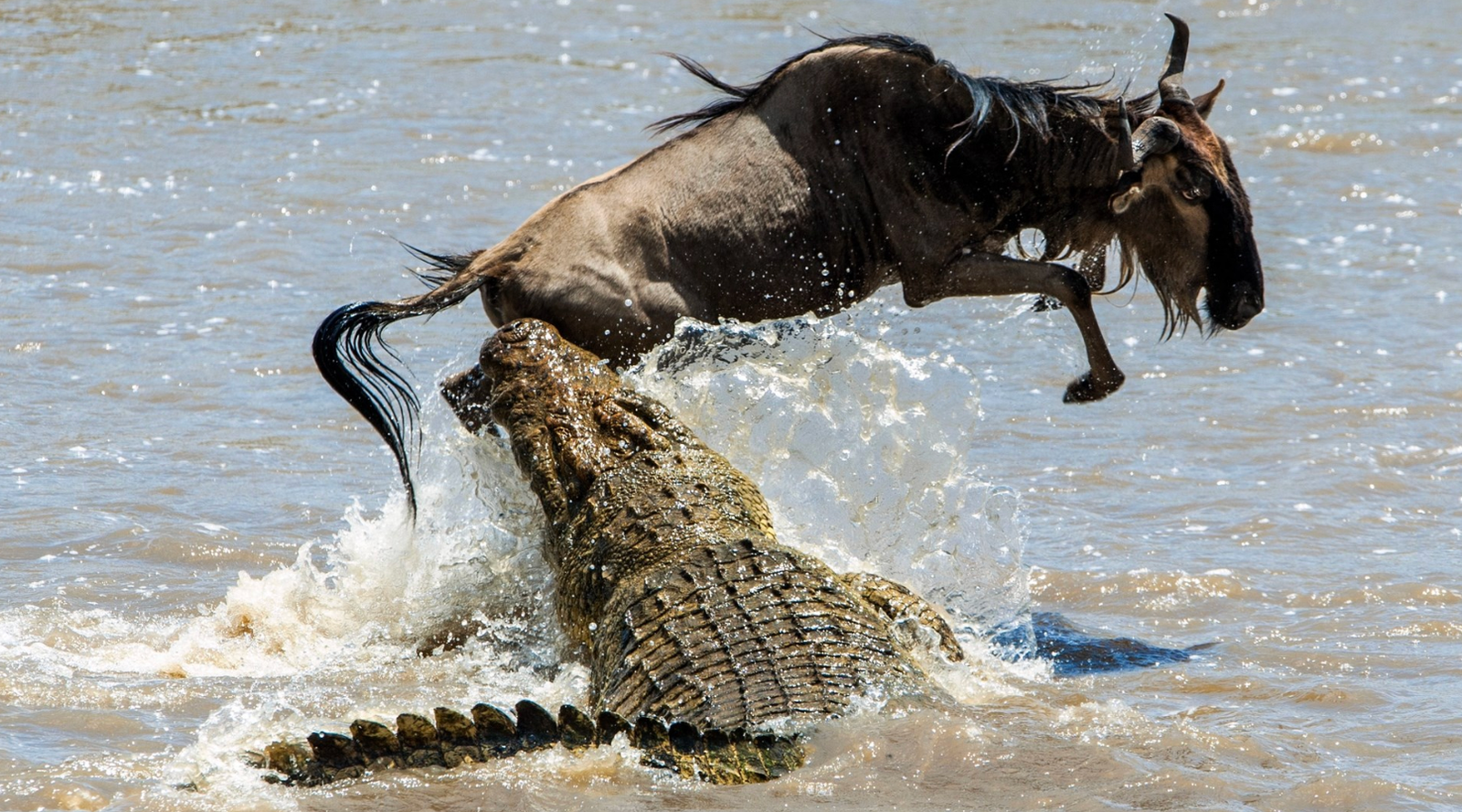
A crocodile can remain nearly motionless waiting for an opportunity. Rather than wasting energy chasing everything it encounters, it lets the opportunity come closer.
Other predators depend on pursuit. Wolves, wild dogs and cheetahs use movement, speed or endurance to close the distance.
Some combine the two approaches.
A leopard may initially rely on concealment and surprise, then switch to pursuit if its first opportunity doesn't work.
Hunters unknowingly borrow from these same strategies.
Sitting quietly in a blind or stand is essentially a patience-based strategy. Spot-and-stalk hunting requires movement and careful observation. Driven hunts rely on cooperation and coordinated movement.
But there’s another side of this relationship that may be even more valuable to understand.
The animal you're pursuing has spent its entire life avoiding things that want to catch it.
Start Thinking Like the Prey
A whitetail deer doesn't need to understand exactly what made a sound behind it.
It only needs to decide whether that sound represents danger.
That distinction matters.
Imagine you're walking through the woods and accidentally snap a branch.
Your instinct might be to keep moving because the damage has already been done.
But watch what a deer often does when something doesn't seem right.
It may freeze.
Its head comes up. Its attention shifts toward the disturbance. It listens, watches and tries to gather more information before deciding whether to leave.
If you continue moving immediately, you may provide exactly the additional information it needs.
Sometimes the smarter response is simply to stop.
That little example illustrates something bigger: hunting isn't only about understanding where an animal travels. It's about understanding how that animal makes decisions.
Why does it stop?
What catches its attention?
Where does it go when disturbed?
What sounds does it associate with danger?
When does it feel comfortable enough to resume normal behavior?
Those questions can teach you far more than simply memorizing where you saw an animal last season.
The Outline Problem
Animals don't necessarily need to see every detail of something to recognize that it doesn't belong.
Sometimes an unusual shape is enough.
Nature is messy. Branches overlap. Leaves create irregular patterns. Light and shadows break things apart visually.
Then you introduce a perfectly defined human outline.
Suddenly something looks different.
The Best Self-Defense Skill May Be Avoiding the Fight Entirely
There’s a mistake people sometimes make when they begin thinking seriously about personal protection.
They focus almost entirely on what they would do after something goes wrong.
How would I respond? Would I recognize the danger quickly enough? Would I know what to do?
Those are reasonable questions.
But William Aprill, a mental health professional, former law-enforcement officer and respected instructor who spent years studying criminal behavior, approached the subject from another direction.
He wanted people to understand what happens before the confrontation.
More specifically, he wanted them to understand how someone looking for a victim might decide whom to approach—and whom to leave alone.
That leads to an idea worth remembering:
The safest confrontation may be the one you were never selected for.
Criminals Make Decisions, Too
We often imagine dangerous encounters as spontaneous events.
Sometimes they are.
But other times, the person initiating the encounter has already been watching, evaluating and making decisions.
Aprill spent considerable time studying this process. His broader lesson wasn't that ordinary people should become amateur criminal profilers. It was that people intending harm don't necessarily choose targets randomly.
They may look for opportunity.
Someone distracted by a phone.
Someone who doesn't notice another person getting unusually close.
Someone who appears confused about where they're going.
Someone whose attention is somewhere other than the environment immediately around them.
Viewed this way, personal safety begins considerably earlier than most people think.
It can begin before anyone says a word.
The Idea of “Deselection”
One of Aprill's most interesting concepts was something he called deselection.
Instead of asking only, “How do I win if someone chooses me?”
Ask:
“How do I make myself less attractive to choose in the first place?”
That doesn't mean walking around trying to look intimidating.
In fact, deliberately acting tough can create problems of its own.
The more useful idea is simply looking engaged with your surroundings.
Imagine two people leaving a store at night.
One walks toward the parking lot while staring at a phone. Their head is down. They don't notice who's nearby. They reach their vehicle and begin searching through a bag for their keys.
The other person puts the phone away before leaving the store.
They know roughly where they parked. They glance around as they walk. Their keys are already accessible. They notice the person standing several cars away.
Nothing dramatic happens.
That's exactly the point.
Awareness Isn't Paranoia
Situational awareness sometimes gets presented as if you're supposed to spend your entire life suspicious of everyone around you.
That's neither practical nor healthy.
Awareness can be much simpler.
You're walking through a parking garage and notice who's nearby.
You enter a restaurant and casually notice where the exits are.
Someone approaches you with an unusual question and you recognize that another person has moved unusually close behind you.
You notice when something changes.
Most importantly, you trust yourself enough to respond to that information.
That response might be as simple as changing direction, returning to a populated area, creating distance or leaving.
None of those decisions requires confrontation.
In fact, their entire purpose is to prevent one.
Pay Attention to Boundaries
Another useful lesson from studying criminal behavior involves boundaries.
Unwanted encounters don't always begin with obvious aggression.
Sometimes they begin with a request.
“Can you help me with something?”
“Do you have a minute?”
“Can I borrow your phone?”
Most requests are perfectly innocent.
But you're still allowed to maintain distance and decide whether you want to participate.
If someone ignores a polite refusal, continues approaching after you've created distance, or tries repeatedly to redirect your attention, the behavior itself becomes useful information.
You don't have to determine exactly why someone is behaving strangely before deciding to leave.
That's an important distinction.
We often feel obligated to be polite even when something doesn't feel right.
Being courteous doesn't require surrendering your boundaries.
Your Mind Is Part of Your Preparedness
Aprill's broader message was that preparedness isn't simply about equipment.
There's a mental component.
You can own every piece of emergency equipment imaginable and still make poor decisions because you weren't paying attention.
Conversely, noticing something early can give you options.
Maybe you cross the street.
Maybe you don't enter the elevator.
Maybe you return to the store.
Maybe you drive away instead of getting out of the vehicle.
Those aren't particularly exciting stories.
Nobody goes home afterward and tells friends about the confrontation they avoided.
But from a personal-safety standpoint, that's the outcome you should want.
The Earlier You Notice, the More Options You Have
Think of awareness as buying yourself time.
If you notice a questionable situation from 50 feet away, you may have several choices.
At 20 feet, you have fewer.
Once someone is directly beside you, your options may become considerably more limited.
That principle applies well beyond criminal encounters.
We use it while driving. We use it during severe weather. We use it around machinery, animals and countless everyday hazards.
Early recognition creates options.
And options are one of the most valuable forms of preparedness.
That's perhaps the most useful lesson from Aprill's work.
Personal protection doesn't have to begin with imagining the worst thing you might someday be forced to do.
It can begin with something considerably simpler:
Pay attention.
Recognize unusual behavior.
Maintain reasonable boundaries.
Give yourself permission to leave.
And understand that successfully protecting yourself and your family sometimes means nothing happened at all.