
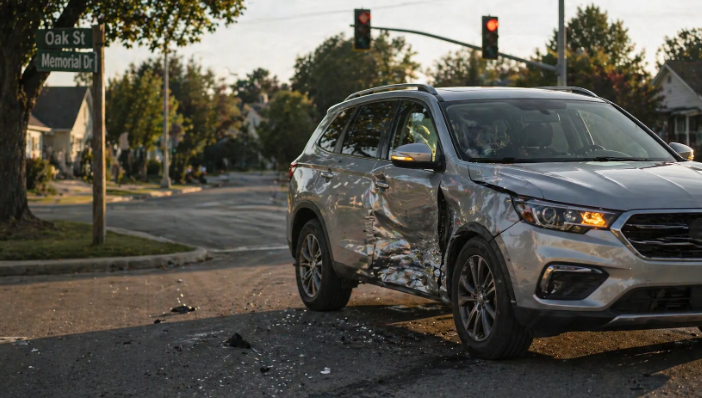
Most drivers have a pretty good idea of what to do when their vehicle breaks down. Pull over, turn on the hazard lights, call for assistance, and wait somewhere safe.
But there's another type of roadside emergency that rarely gets discussed.
What if your vehicle is still running, you're conscious, and you need to get out immediately—but you can't?
A collision can leave doors jammed, windows damaged, and occupants trapped in positions that make even simple movements difficult. In certain situations, such as a vehicle entering water or a fire developing, getting out quickly can become especially important.
The problem is that most people have never practiced getting out of a disabled vehicle. They assume the doors will open, the seatbelt will release, and the windows will work.
Those assumptions are worth examining before an emergency.
Here are five things every driver should understand, including a few details that might surprise you.
1. Your Vehicle May Have Two Different Types of Side Windows
Here's something you probably weren't told when you purchased your vehicle.
The windows on the same car may not all be made from the same material.
Tempered glass is designed to break into many small fragments when struck with sufficient force. Laminated glass, on the other hand, uses layers of glass bonded to a plastic interlayer. When it cracks, that interlayer helps hold the glass together.
Both designs serve important safety purposes, but they behave very differently in an emergency.
A conventional vehicle escape tool may break compatible tempered glass while failing to create an opening through laminated glass.
And laminated side windows have become increasingly common in certain vehicles.
That means purchasing a window-breaking tool without understanding your vehicle's glass construction could give you a false sense of security.
What you can do: Check your owner's manual or ask the manufacturer which side windows are tempered and which are laminated. Some windows also have markings identifying their construction.
Don't assume the front and rear side windows are identical.
2. The Door You Entered Through May Not Be Your Best Exit
Imagine a collision that damages the driver's side of your vehicle.
The door frame bends just enough to prevent the door from opening. You're still conscious and able to move, but your normal exit is blocked.
What would you do?
Most drivers instinctively try the same door repeatedly. But depending on the damage, another door or window may offer a safer way out.
This is where knowing your vehicle's interior layout becomes useful.
Can you reach the passenger-side door from the driver's seat? Is there a center console that makes moving across the front seats difficult? If you drive an SUV, can you reach the rear seating area?
The answers vary considerably by vehicle.
What you can do: While safely parked, identify alternative exits and consider whether you could reach them if your usual door became unusable.
Remember that after a serious collision, injuries or vehicle damage may make movement unsafe. If there's no immediate danger and you may have a neck or spinal injury, staying still and waiting for emergency responders may be the safer choice.
The point isn't to escape at all costs. It's to know your options.
3. Your Seatbelt Can Become an Unexpected Obstacle
Seatbelts save lives. They're among the most important safety features in any vehicle.
But a severe collision can occasionally create circumstances where a belt becomes difficult to release.
The buckle could be damaged. The belt may be under tension. Or your body position might make reaching the release button unusually difficult.
Now add darkness, confusion, or an urgent need to leave the vehicle.
Suddenly, something you've done thousands of times—unfastening your seatbelt—may not be straightforward.
That's one reason dedicated vehicle escape tools sometimes include a protected cutting blade designed to slice through seatbelt webbing.
The important detail is accessibility.
A cutter stored in the trunk won't help someone who can't leave the driver's seat.
Neither will a tool buried beneath paperwork in the glove compartment if that compartment has been damaged or is out of reach.
What you can do: Consider keeping a purpose-built escape tool securely mounted within reach of the seated driver, where it won't become a loose projectile during a collision.
A seatbelt cutter is an emergency backup, not a substitute for the normal buckle release.
4. A Window Breaker Is Only Useful If You Know Its Limitations
There's a common assumption that any object with a pointed metal tip can break a car window.
That's not necessarily true.
Different tools operate differently. Some require a forceful strike. Others use a spring-loaded mechanism that releases a concentrated impact when pressed against compatible glass.
Neither design guarantees an exit.
The glass type, tool condition, placement, and surrounding vehicle damage all affect the result.
It's also important to understand that windshields are typically laminated and are not suitable escape targets for ordinary tempered-glass breakers.
This is why a tool demonstration on a piece of tempered glass shouldn't be interpreted as proof that the same tool will work on every window in every vehicle.
One compact option worth examining combines a spring-loaded glass breaker with a protected seatbelt cutter.
Take a closer look at this vehicle escape tool →
The advantage of a compact design is that it may be easier to secure somewhere accessible instead of storing it with larger roadside supplies.
But before purchasing any tool, check its specifications, compatibility, and instructions.
What you can do: Determine which windows in your vehicle are compatible with the tool you're considering. Then choose a secure storage location you can reach while wearing your seatbelt.
5. Your Emergency Supplies Need Two Different Storage Plans
Most drivers organize their emergency equipment around one assumption: They'll be able to get out of the vehicle and retrieve it.
That's why roadside kits usually end up in the trunk or cargo area.
For jumper cables, spare clothing, bottled water, and larger first aid supplies, that makes sense.
But certain emergencies require a different approach.
If you're trapped in the driver's seat, anything stored behind you might as well be a hundred feet away.
A useful way to think about vehicle preparedness is to separate supplies into two categories.
Roadside recovery supplies: Equipment you'll use after safely leaving the vehicle, such as reflective warning triangles, a flashlight, jumper cables, and a larger first aid kit.
Immediate-access supplies: Small items that may be needed while you're still seated, such as an accessible emergency communication device and a suitable vehicle escape tool.
Even then, placement matters.
A loose object in a cupholder or door pocket can be thrown around during a collision. A securely mounted tool is generally preferable, provided it doesn't interfere with airbags, pedals, or normal driving.
What you can do: Review your emergency kit and identify anything you might need before you can open a door. Decide whether it belongs in a secure, reachable location instead.
The Five-Minute Vehicle Escape Check
Here's a simple exercise you can do this weekend without purchasing anything.
Park your vehicle somewhere safe, turn off the engine, and sit in the driver's seat.
Then work through these questions:
- If my driver's door were blocked, which other exit could I realistically reach?
- Do I know which of my side windows use tempered glass?
- If my seatbelt buckle became unusable, would I have a backup option?
- Could I reach my emergency supplies without opening a door?
- If I couldn't find my phone after a collision, would I have another way to call for help?
You don't need to simulate a crash, break glass, or test a cutting blade to learn something valuable.
Simply identifying where your equipment is stored and understanding your vehicle's design can reveal weaknesses you didn't know existed.
The One Piece of Emergency Equipment Most Drivers Overlook
There's no shortage of products marketed for vehicle safety. Some are genuinely useful. Others solve problems that are unlikely to occur or make promises they can't consistently deliver.
A compact escape tool is worth considering because it addresses two specific problems: a seatbelt that cannot be released normally and a compatible side window that needs to be broken to create an exit.
That doesn't mean it will work in every accident.
But knowing your vehicle's construction, understanding the tool's limitations, and keeping it accessible can make your preparedness plan more complete.
See the compact window breaker and seatbelt cutter →
Most people prepare their vehicles for flat tires, dead batteries, and unexpected breakdowns.
Far fewer prepare for the possibility that the vehicle itself could become an obstacle to reaching safety.
And that's the detail worth remembering.
The most useful emergency equipment isn't necessarily the largest or most expensive item you own. It's the equipment that addresses a real problem, works with your vehicle, and is available when you need it.