
The Importance of a Bug Out Bag in Uncertain Times
Most emergencies don't begin with a convenient warning telling you exactly what's coming and how much time you have to prepare.
A wildfire changes direction. A hurricane strengthens overnight. A major storm knocks out power across an entire region. Flooding closes the road you normally use. A local emergency forces an evacuation with very little notice.
At the same time, the cost of everyday necessities has made preparedness more complicated. Food, fuel and household expenses already take a larger bite out of many family budgets. Building an emergency plan can easily become something you intend to do “eventually.”
That's exactly why a bug-out bag deserves a place in the conversation.
Not because you should expect disaster around every corner, but because some situations give you very little time to decide what you're taking with you.
And there's a big difference between owning emergency supplies and being ready to leave with them.
What a Bug-Out Bag Is Really Supposed to Do
A bug-out bag is essentially a portable emergency supply system.
The idea is straightforward: if remaining at home becomes unsafe and you need to leave quickly, the essentials you've already selected are organized in one place and ready to go with you.
That distinction is important.
You might already own flashlights, batteries, first-aid supplies, bottled water, portable chargers, tools and shelf-stable food. But where are they?
If the flashlight is in the kitchen drawer, the first-aid kit is in the bathroom, batteries are in the garage, bottled water is downstairs and your portable charger is sitting beside the bed, you're technically prepared with supplies.
You're just not prepared to move.
A properly assembled bug-out bag solves that problem by putting the most important items together before there's pressure to make decisions.
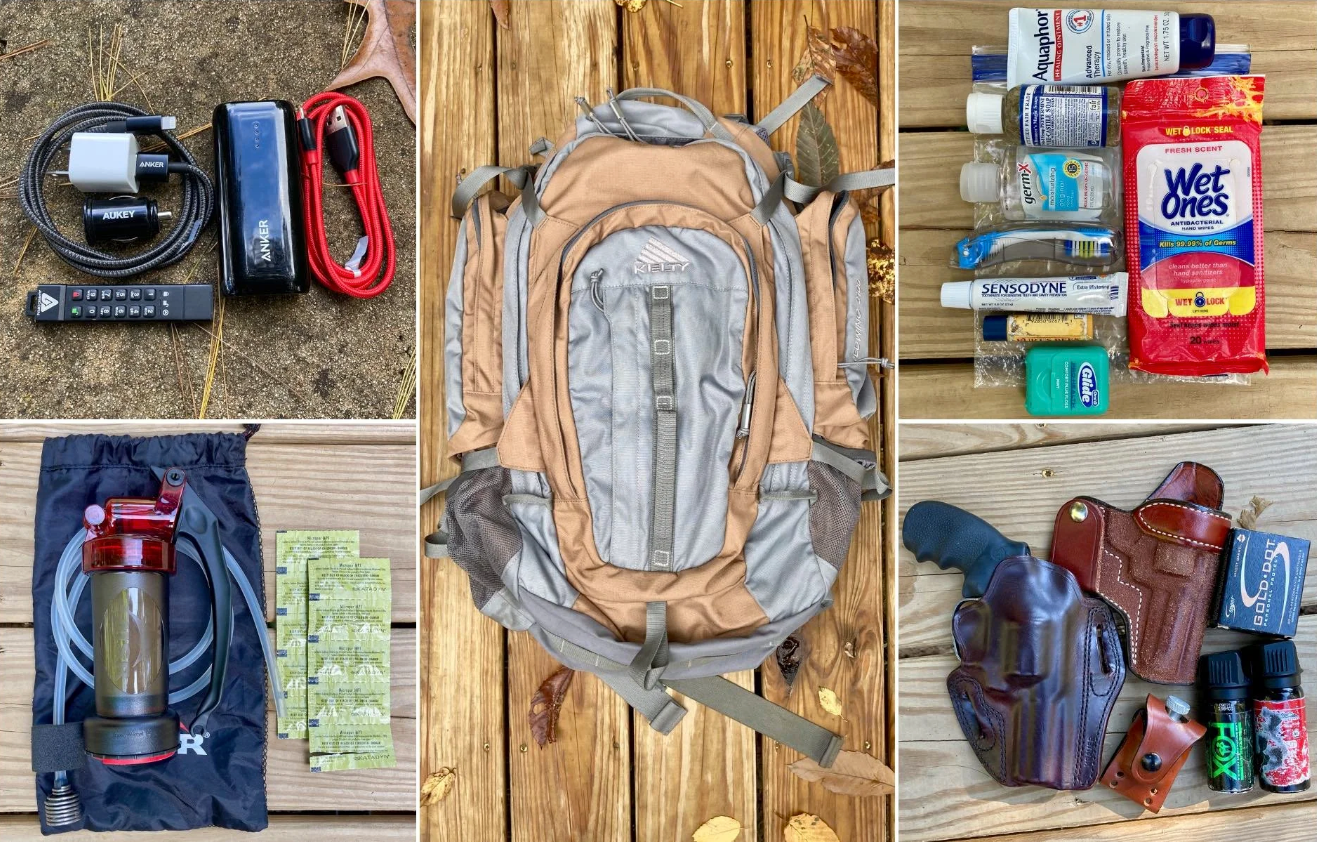
[See what a properly equipped bug-out bag looks like →]
Why the First 72 Hours Matter
You'll frequently hear emergency preparedness discussed in terms of the first 72 hours.
There's a practical reason for that.
An evacuation doesn't necessarily mean you'll be gone for months. You may simply need enough supplies to bridge the period between leaving your home and reaching a safer location, temporary shelter, hotel, family member's home or another place where normal resources are available again.
That's why the goal shouldn't be stuffing everything you could possibly need into the largest backpack you can find.
A useful bug-out bag needs to balance two competing priorities: having enough and remaining mobile.
Your bag isn't much help if it's so heavy that you can't comfortably move with it.
Instead, think in categories.
Water and Hydration
Water should be one of the first considerations.
Carrying some water makes sense, but water gets heavy quickly. That's why a more complete emergency setup may also include ways to filter or purify additional water if your initial supply runs out.
Food
Emergency food doesn't need to resemble your kitchen pantry.
The objective is portable calories that store reasonably well and require little preparation. Energy bars, shelf-stable foods and emergency meals can all have a place depending on your circumstances.
First Aid and Medication
A basic first-aid kit can handle minor cuts, burns and injuries that become considerably more inconvenient when you're away from home.
Prescription medications and personal medical necessities deserve special consideration because a preassembled commercial bag obviously can't anticipate them. They're something each person needs to account for individually.
Light and Power
A flashlight seems almost too obvious to mention—until you're trying to navigate an unfamiliar building, roadside or darkened neighborhood after the power goes out.
Backup batteries, a portable charger and other independent power options can also become useful when electrical service isn't available.
Shelter and Weather Protection
Weather can turn an inconvenient evacuation into a serious problem.
A tarp, emergency blanket, rain protection or other compact shelter materials can provide options if you're unexpectedly exposed to rain, wind, cold or heat.
Tools
This is where people sometimes go overboard.
You don't need to carry your entire garage.
A practical multitool, cutting tool, fire-starting method, cordage and a handful of versatile pieces of equipment can accomplish far more than dozens of highly specialized gadgets.
Navigation and Communication
Your phone is incredibly useful, but preparedness means considering what happens when your preferred system doesn't work.
A paper map weighs almost nothing. A compass doesn't need cellular service. An emergency radio can provide information without relying entirely on your phone.
The idea isn't to abandon technology.
It's simply to avoid making one device responsible for everything.
[See what's included in this ready-to-go setup →]
The Backpack Itself Matters More Than People Think
It's easy to concentrate entirely on what's inside the bag and forget about the thing carrying everything.
Capacity matters. Organization matters. Strap quality matters. Zippers matter. Construction matters.
A bag that's fine for carrying a laptop between your house and car wasn't necessarily designed to hold emergency equipment while being carried for hours.
At the same time, bigger isn't automatically better.
One of the most useful lessons from emergency-pack planning is that the bag should match the person carrying it. A 30-year-old who hikes every weekend may comfortably handle a load that would be completely unrealistic for someone in their seventies.
Your physical ability, climate, location, family situation and likely evacuation distance should determine what belongs in your bag.
Not somebody else's checklist.
That's also why it's worth periodically putting your completed bag on and walking around with it.
You'll learn very quickly whether you've built an emergency resource or a 60-pound anchor.
Where You Keep It Matters, Too
A perfectly assembled bug-out bag isn't particularly useful if you can't reach it.
Think about the emergencies most likely to affect where you live.
If wildfire is a concern, you might need to leave your house quickly. If severe storms are common, your circumstances could be completely different. Someone who works 40 miles from home faces another set of problems entirely.
The best location is generally somewhere accessible enough that you can grab the bag without searching for it.
Family members should know where it is, too.
This is one of the overlooked benefits of preparing a bag ahead of time. It removes decisions from a situation where people may already be stressed.
Instead of asking, “What do we need?”
The answer becomes, “Grab the bag.”
Preparedness Is Really About Buying Yourself Options
A bug-out bag doesn't guarantee that an emergency will go smoothly.
Nothing does.
What it gives you are options.
Water if clean water isn't immediately available. Light when electricity isn't available. Basic medical supplies when the medicine cabinet is miles away. Food when stores are closed. Shelter when you're exposed to the weather. Navigation when your phone isn't cooperating.
More importantly, it puts those options in one place.
That's what separates a collection of emergency supplies from an actual evacuation plan.
You can certainly build one yourself. In fact, going through the process item by item is a useful exercise because it forces you to think seriously about what you'd need if you had to leave home unexpectedly.
But not everyone wants to research, source and organize dozens of individual pieces of equipment.
That's where a preassembled system can make sense as a starting point. You can begin with the major emergency categories already covered, then personalize the bag with medications, documents, clothing, food, maps and anything else specific to your family.
The important part isn't whether you assemble everything yourself or start with something that's already put together.
It's whether the bag is actually ready when you need it.
Because an emergency is a terrible time to discover that everything you need is somewhere in your house—you just don't know exactly where.